@~Anastasiia Mishchenko
The invitation arrived with fewer than twenty-four hours to spare. In Ukraine, security protocol dictates that high-profile gatherings cannot reveal their locations in advance. So, until the night before the Donbas Media Forum 2026, I didn’t even know where I was headed—only that I needed to be there.
Traveling through cities where air raid sirens slice through the air and sudden blackouts plunge entire blocks into pitch darkness, you quickly learn why events like this cannot be postponed. Amid the constant threat of missiles and drones, continuing to gather is an act of defiance. Disinformation thrives when people are isolated, divided, and silent; coming together to protect our children’s minds from Russian propaganda is as critical to our survival as any physical defense.
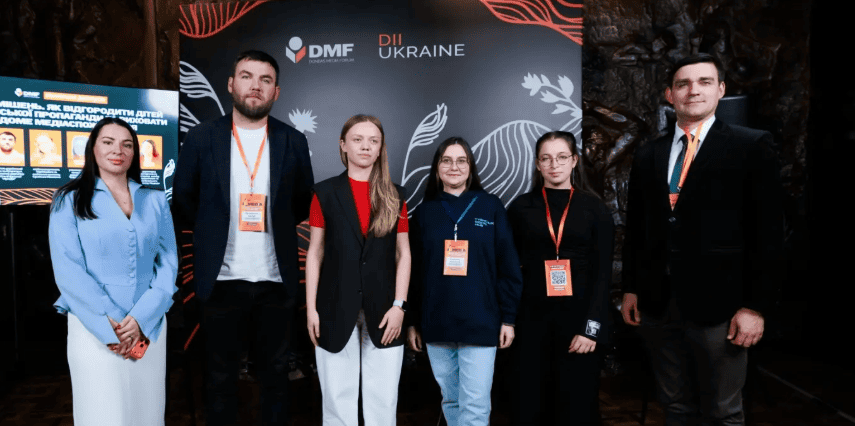
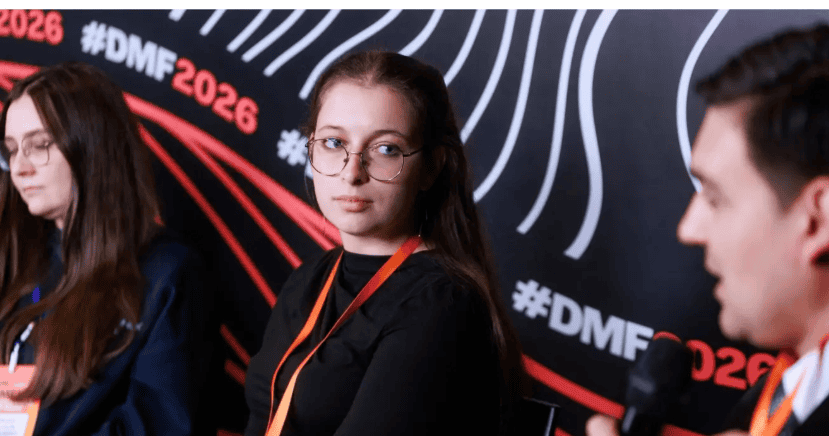
Stepping into the venue, the energy was palpable—a hum of low, urgent conversations, the clinking of coffee cups, and the warm, fluorescent glow of lights powered by humming backup generators outside. When I took my seat on the stage for the panel “Children as a Target: How to Shield Children from Russian Propaganda and Foster Conscious Media Consumption,” the contrast was striking. To my left and right sat established authorities in national education, public broadcasting, YouTube strategy, and legal advocacy:
* Artur Proidakov, Executive Director of the “MriyDiy” Educational Foundation
* Yulia Halkina, Head of Children’s, Adolescent, and Educational Content at Suspilne Ukraine
* Anastasiia Skobliuk, YouTube Lead
* Marina Tkachuk, Director of the Department of Control, Analysis, Strategic, and Regional Development at the National Council of Television and Radio Broadcasting of Ukraine
* Ihor Rozkladai (Moderator), Deputy Director of the Centre for Democracy and Rule of Law (CEDEM)
Looking out at the audience, I realized I was the only young person sitting among these veteran leaders, representing KidsKonnectUkraine. But I wasn’t there as a passive subject of media literacy campaigns—I was there to show that youth are active co-creators of real, solution-driven content.
Sitting under the bright stage lights, mic in hand, I brought an irreplaceable, first-hand perspective on what my generation is truly experiencing:
* Maturity born from war: Ukrainian youth have grown up overnight. We don’t just recognize our problems; we are actively designing authentic solutions and filling the gaps in quality media content ourselves.
* Global connection through digital media: Digital platforms like our youth-led podcast UKnow give us a direct line to international audiences, translating the lived realities of Ukrainian children into shared empathy and peer-to-peer understanding around the world.
* What young creators actually need: To build media that works, we don’t need top-down lecturing or rigid, adult-driven structures. We need genuine mentorship, intergenerational dialogue, and access to actual technical and financial resources.
During the discussion, I shared a moment from our very first UKnow episode that has stayed with me, one that captured the quiet emotional burden so many young people carry today:
“Analysis of our first UKnow episode on ‘Peace’ showed that children do not think superficially—peace isn’t just ‘when there is no shooting.’ We reflect through deep emotional and internal states. A child fleeing a dangerous region to a relatively safe one still struggles to find internal peace. Media designed for youth must understand and honor these deeper emotional realities.”
Sharing the stage with national media regulators and broadcasters proved something vital: young people belong at the table whenever policy and media strategies about our future are being shaped.
When you empower young people with trust, the right tools, and real mentorship, you don’t just build a media strategy—you build the strongest possible shield against disinformation.